

If you are new to sewing, you may have heard the word Nahttypen and wondered what it means. It is a German word that simply means seam types. A seam is the line where two pieces of fabric are joined together using a needle and thread. Knowing the different Nahttypen is one of the most important things you can learn as a beginner. It helps you choose the right method for every sewing project, and it makes your finished work look much better.
Why Do Nahttypen Matter?
You might think that any seam will do the job. But that is not true. Different seam types have different strengths. Some seams are very strong and work well for heavy fabrics like denim. Others are clean and smooth, making them perfect for light, thin fabrics like silk or chiffon. Some seams can even stretch, which is great for sportswear.
When you choose the wrong seam for your fabric, the result can look messy, come apart easily, or feel uncomfortable to wear. That is why learning about Nahttypen is so important.
A good seam also does more than just hold fabric together. It can make your work look professional, help the garment last longer, and even add a decorative touch to the design.
The Most Common Nahttypen Explained
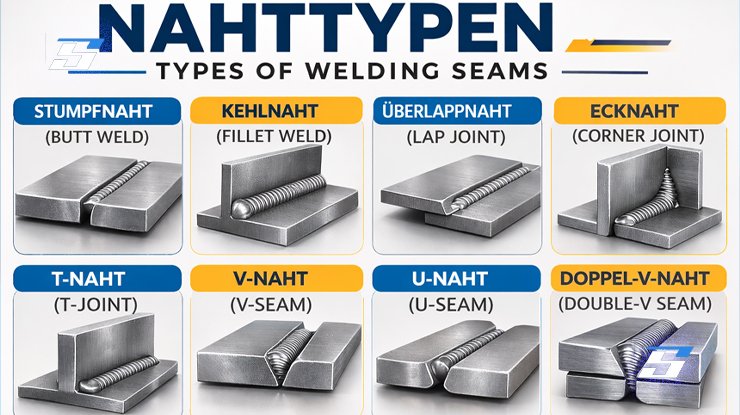
1. Plain Seam (Einfachnaht)
The plain seam is the most basic and most used seam in sewing. Almost every beginner starts with this one. To make a plain seam, you place two pieces of fabric together with the right sides facing each other. Then you sew a straight line along the edge.
This seam is simple and quick to make. It works well with most medium-weight fabrics like cotton and linen. However, it leaves raw edges on the inside of the garment. These raw edges can fray over time if you do not finish them properly.
Best for: Everyday clothing, cotton fabrics, general sewing projects.
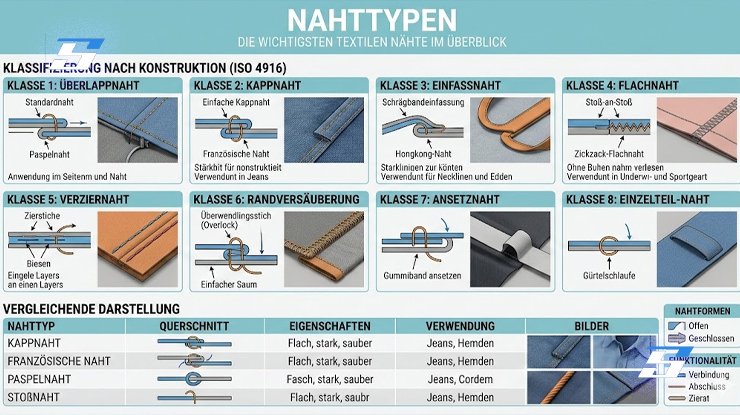
2. French Seam (Französische Naht)
The French seam is a bit more advanced, but it gives a very clean result. It hides the raw edges completely inside the seam. This makes it perfect for fabrics that fray easily, like silk, chiffon, or organza.
To make a French seam, you first sew the fabric with the wrong sides together. Then you fold it so the right sides face each other and sew again. The raw edges are now hidden inside. It looks neat from both the outside and the inside of the garment.
Best for: Lightweight fabrics, sheer materials, items that need a clean inside finish like blouses or lingerie.
3. Flat-Felled Seam (Flachnaht)
The flat-felled seam is one of the strongest seam types you can make. You have probably seen it on jeans. It lies flat against the fabric and shows two visible lines of stitching on the outside. This seam is very durable and does not come apart easily, even with heavy use.
It takes a little more time to sew, but the result is very strong and professional-looking. It also hides the raw edges neatly inside the seam.
Best for: Heavy fabrics like denim, canvas, and workwear. Also great for items that will be washed and worn a lot.
4. Overlocked Seam (Overlocknaht)
The overlocked seam is made using a special machine called an overlocker or serger. This machine sews, trims, and finishes the raw edge all at the same time. The result is a stretchy seam that works very well on knit fabrics and sportswear.
If you do not have an overlocker, you can use the zigzag stitch on a regular sewing machine. It is not exactly the same, but it gives a similar stretchy finish.
Best for: Knit fabrics, jersey, stretchy materials, sportswear, and T-shirts.
5. Zigzag Seam (Zickzacknaht)
The zigzag seam is made using the zigzag stitch setting on your sewing machine. The stitch moves from side to side, which means it can stretch without breaking. This makes it a great choice for elastic fabrics.
You can also use the zigzag stitch to finish the raw edges of a plain seam. It stops the fabric from fraying and makes the inside of your garment look much tidier.
Best for: Stretch fabrics, finishing raw edges, knit garments.
6. Lapped Seam (Überlappungsnaht)
A lapped seam is made by overlapping one piece of fabric on top of another and sewing them together. This is different from most seams where the fabrics are sewn edge to edge. The lapped seam is often used in leather and vinyl sewing, because these materials do not fray and cannot be pressed open.
It is also used in some heavy fabrics where a flat, strong seam is needed without too much bulk.
Best for: Leather, vinyl, felt, and thick non-woven fabrics.
7. Welt Seam (Steppnaht)
The welt seam is similar to the flat-felled seam, but only one row of topstitching is visible on the outside. It is strong and used in tailored clothing like jackets and coats. It gives a clean, professional look.
This seam is a bit easier to make than the flat-felled seam but still provides good strength and a tidy finish.
Best for: Jackets, coats, structured garments, and thick fabrics.
8. Decorative Seam (Dekorative Naht)
Not all seams are hidden. Some seams are designed to be seen. A decorative seam uses topstitching, embroidery, or piping to add style to a garment. You can often see this on denim jeans, bags, or casual jackets.
You can use different colored thread to make the seam stand out. This is a fun way to add a personal touch to your sewing projects.
Best for: Fashion details, bags, denim, and any project where you want the seam to be part of the design.
How to Choose the Right Nahttyp for Your Project
Choosing the right seam is not as complicated as it sounds. Here are a few simple tips to help you decide:
Think about your fabric. Is it light and thin? Use a French seam. Is it heavy and thick? Use a flat-felled seam. Is it stretchy? Use an overlocked or zigzag seam.
Think about how the item will be used. Will it be washed many times and worn hard? Choose a strong seam like the flat-felled seam. Is it a decorative item that will not be used much? A simple plain seam may be enough.
Think about the inside finish. If the inside of your garment will be visible, like in a reversible jacket or a high-quality blouse, choose a seam that hides the raw edges, like the French seam or the flat-felled seam.
Think about your skill level. If you are just starting out, begin with the plain seam. Once you are comfortable, try the French seam or the flat-felled seam.
Common Mistakes Beginners Make with Nahttypen
Even experienced sewers sometimes make mistakes. Here are some of the most common ones to avoid:
Not pressing your seams. After you sew a seam, you should press it with an iron. This makes the seam lie flat and look much neater. Many beginners skip this step and wonder why their work looks wrinkled.
Ignoring seam allowances. A seam allowance is the space between the edge of the fabric and the line of stitching. If your seam allowance is too small, the seam may come apart. If it is too large, the garment may not fit correctly. Always follow the pattern instructions for seam allowances.
Using the wrong thread tension. If your thread is too tight or too loose, the seam will look bad or pucker. Check your machine settings before you start sewing.
Not finishing raw edges. On a plain seam, the raw edges need to be finished so they do not fray. You can do this with a zigzag stitch, pinking shears, or an overlocker.
Choosing the wrong seam for the fabric. As we mentioned earlier, using the wrong seam can make your project fall apart or look unprofessional. Always match the seam type to the fabric and the purpose of the item.
A Quick Reference Table for Nahttypen
| Seam Type | Best Fabric | Key Benefit |
|---|---|---|
| Plain Seam | Cotton, linen | Simple and quick |
| French Seam | Silk, chiffon | Clean, no raw edges |
| Flat-Felled Seam | Denim, canvas | Very strong |
| Overlocked Seam | Knit, jersey | Stretchy finish |
| Zigzag Seam | Stretch fabrics | Flexible and easy |
| Lapped Seam | Leather, vinyl | No fraying needed |
| Welt Seam | Coats, jackets | Strong and tidy |
| Decorative Seam | Any fabric | Adds style |
Final Thoughts
Learning about Nahttypen is one of the best things you can do when you start sewing. Once you understand the different seam types and when to use them, your sewing projects will look much better and last much longer. Start with the plain seam and practice until you feel comfortable. Then try the French seam and the flat-felled seam. With time and practice, you will be able to choose the right seam for any project without even thinking about it.
Sewing is a skill that takes time to learn, but every stitch you make brings you closer to becoming a confident and skilled sewer. Do not be afraid to make mistakes. That is how you learn. And now that you know the most important Nahttypen, you are already one step ahead.
10 Frequently Asked Questions About Nahttypen
1. What does Nahttypen mean in English? Nahttypen is a German word that means seam types. It refers to the different ways fabric pieces can be joined together with stitching.
2. Which seam type is best for beginners? The plain seam is the best place to start. It is simple, quick, and works well with most common fabrics like cotton.
3. What is the strongest seam type? The flat-felled seam is one of the strongest seam types. It is used in jeans and heavy-duty clothing because it holds up well under stress and frequent washing.
4. Can I use a French seam on thick fabric? No. The French seam works best on light and thin fabrics. Using it on thick fabric creates too much bulk and makes it hard to sew neatly.
5. Do I need a special machine for overlocked seams? An overlocker machine gives the best results. However, you can use the zigzag stitch on a regular sewing machine as an alternative for finishing edges on stretchy fabrics.
6. Why do my seams look puckered? Puckering usually happens because the thread tension on your machine is not set correctly, or because the fabric is being pulled while you sew. Check your machine settings and let the fabric feed through naturally.
7. What is a seam allowance? A seam allowance is the distance between the edge of the fabric and the line where you sew. Most sewing patterns use a seam allowance of 1.5 cm or 5/8 inch. Always follow the instructions on your pattern.
8. How do I stop my fabric from fraying at the seams? You can finish the raw edges with a zigzag stitch, use an overlocker, cut the edges with pinking shears, or choose a seam type that hides the raw edges, like the French seam or flat-felled seam.
9. What seam should I use for a T-shirt? For T-shirts and other stretchy clothing, use an overlocked seam or a zigzag seam. These seams can stretch with the fabric and will not break when you move.
10. Is it important to press seams after sewing? Yes. Pressing your seams with an iron after sewing makes a big difference. It helps the seam lie flat, improves the overall look of your work, and makes the finished garment look much more professional.
Stay connected for the latest news and updates on, Sport Mega