



If you have ever thought about studying engineering in Spain, you may have come across the name Centro Politécnico Superior, or CPS. This school has a long and proud history of training some of Spain’s best engineers. Whether you are a student, a parent, or just curious, this guide will tell you everything you need to know about this amazing institution.
What Is Centro Politécnico Superior?
Centro Politécnico Superior, often called CPS, was a well-known higher education school for engineering and architecture. It was part of the University of Zaragoza, located in the city of Zaragoza, in northeastern Spain.
For many years, CPS was one of the most respected engineering schools in the country. It helped thousands of students build strong careers in technology, industry, and science. Today, the school lives on under a new name, but its legacy continues to inspire students and professionals all over Spain and beyond.
A Short History of CPS
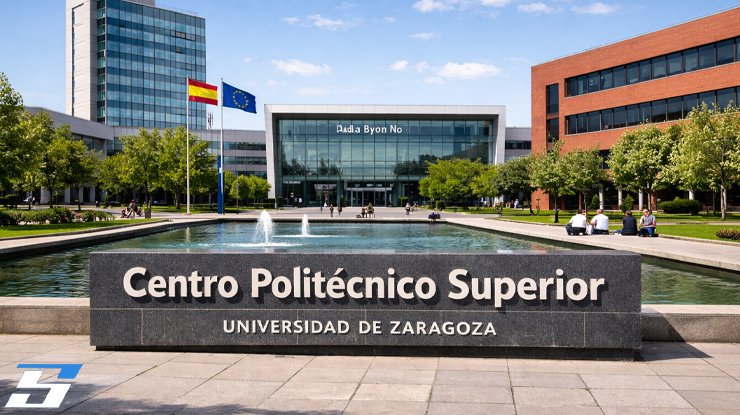
The story of CPS starts back in 1974, when Spain was growing fast as an industrial country and needed more engineers. At that time, the school was called the Escuela Técnica Superior de Ingenieros Industriales de Zaragoza, or ETSIIZ for short.
In 1986, the school moved to a brand-new campus in the Actur district of Zaragoza. This was a big step forward, giving students and teachers better buildings, labs, and spaces to work in.
Then, in 1989, the school went through an important change. It got a new name: Centro Politécnico Superior. This name change was not just about words. It showed that the school now wanted to cover more areas, not just industrial engineering. It was growing to include computer science and telecommunications too.
By 1999, the school had already trained nearly 2,500 engineers, which was a great achievement in just 25 years.
The Campus and Location
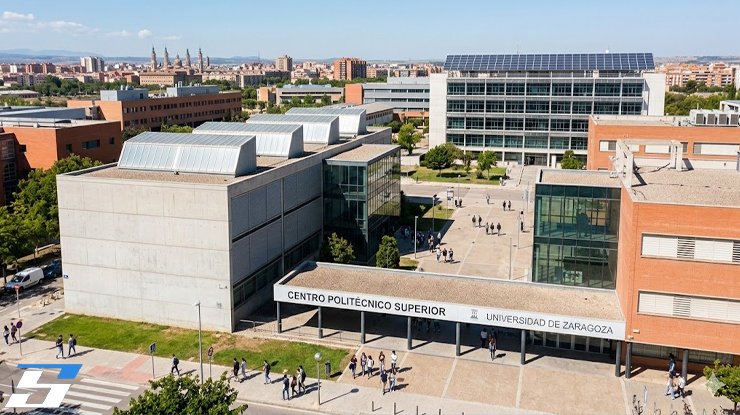
CPS is located on the Río Ebro Campus in the Actur district of Zaragoza. Unlike the main university campus, this campus was built specifically for technology and science.
The Río Ebro Campus is like a small “tech city.” It is home not only to classrooms and labs but also to research centers and business spaces where new ideas can grow. Students here are surrounded by innovation every day.
The campus has modern buildings with well-equipped laboratories, computer rooms, and shared spaces where students can collaborate. It is a great environment for learning and for developing practical skills that employers value.
Programs Offered at CPS
One of the reasons CPS became so popular is because it offered a wide range of engineering programs. Over the years, it expanded well beyond its original focus on industrial engineering.
Here is a look at the main programs the school offered:
Industrial Engineering was the original program when the school first opened. It focused on manufacturing, energy, mechanics, and production systems. This program prepared students to work in factories, power plants, and many other industries.
Telecommunications Engineering was added in 1990/91. This program taught students about radio, telephone networks, satellite systems, and modern communication technologies.
Computer Engineering came next, starting in 1992/93. As computers became more important in every part of life, the need for trained computer engineers grew. This program taught students about software, hardware, systems, and programming.
Chemical Engineering was introduced in 1994/95. This program covered topics like chemistry, materials, and industrial processes used in making products like medicines, plastics, and fuels.
In addition to these main programs, CPS also offered postgraduate studies in areas like Industrial Organization, Environmental Studies, and Digital Technologies. These courses helped graduates go deeper into their field or explore a new area of expertise.
Research and Industry Connections
One thing that made CPS stand out was its strong connection to real industry. The school did not just teach theory. It also encouraged students to work with real companies and solve real problems.
Students at CPS had access to internship programs and industry projects that were part of their studies. This gave them hands-on experience before they even graduated. Many local and national companies worked closely with the school to find talented young engineers.
The school also had close ties to research institutes on and near the campus. This meant that some students could take part in cutting-edge research projects while still completing their degrees.
Graduates of CPS went on to work in many exciting fields, including:
- Automotive engineering
- Aerospace and aviation
- Renewable energy and environment
- Construction and infrastructure
- Digital technology and software
- Telecommunications and networks
- Scientific research and academia
Notable Alumni
The success of CPS can also be seen in the achievements of its graduates. Former students of the school have gone on to reach impressive positions around the world.
Some alumni have become top executives at major Spanish and international companies. Others have become lead researchers at famous institutions like NASA and CERN, the world-famous physics laboratory in Switzerland.
Several graduates have also become successful entrepreneurs. They used the skills they learned at CPS to start their own technology companies, many of which grew from small ideas into large businesses.
This record shows that a degree from CPS was not just a piece of paper. It was a solid foundation for a successful career.
The Transformation into EINA (2011)
In 2011, something important happened. CPS merged with another school called the Escuela Universitaria de Ingeniería Técnica Industrial (EUITI) to create a new institution: the Escuela de Ingeniería y Arquitectura, or EINA.
This change was part of a larger effort called the Bologna Process, which aimed to make university education more equal and easier to compare across European countries. As part of this process, many Spanish universities reorganized their schools and degree programs.
The merger was not a loss. In fact, it brought together the strengths of both schools under one roof. EINA today continues to offer engineering and architecture programs at the University of Zaragoza, building on everything that CPS had created over the decades.
Even today, many people in Zaragoza still refer to the campus by its old name, CPS. It is a name that carries great meaning and respect in the local community.
Why CPS Still Matters Today
Even though Centro Politécnico Superior no longer exists under that name, its impact is still felt in many ways.
First, its graduates are out there in the world, working in important jobs and making a difference in their fields. The skills and values they learned at CPS continue to guide them every day.
Second, the programs and research culture that CPS built are now part of EINA. Students at EINA today benefit from the strong academic traditions that CPS established over many years.
Third, CPS helped shape Zaragoza as a city of technology and innovation. The Río Ebro Campus, which CPS helped establish, is now a hub for research, business, and education. It attracts companies, researchers, and students from all over Spain and Europe.
Tips for Students Interested in Studying at EINA
If you are thinking about studying engineering or architecture in Zaragoza, here are some simple tips to help you get started:
Visit the official website of EINA at the University of Zaragoza to learn about the current programs available. You can also find information about admission requirements, scholarships, and campus life.
Try to visit the campus if you can. The Río Ebro Campus is a great place to get a feel for what student life is like. You can talk to current students, visit the facilities, and ask questions.
Look into the double degree programs and exchange opportunities. EINA has connections with universities across Europe and beyond. Studying abroad for a semester can be a great experience.
Think about which field of engineering interests you most. EINA offers programs in industrial engineering, computer science, telecommunications, chemical engineering, and architecture. There is something for everyone.
Final Thoughts
Centro Politécnico Superior may no longer exist under its original name, but its story is one of growth, excellence, and impact. From its humble beginnings in 1974 to the thousands of engineers it trained over the decades, CPS left a lasting mark on Spanish education and industry.
If you are passionate about engineering, technology, or architecture, following in the footsteps of CPS graduates at today’s EINA is a wonderful path to consider. The spirit of CPS lives on, and it continues to inspire new generations of students every year.Share
Frequently Asked Questions (FAQs)
1. What is Centro Politécnico Superior (CPS)? Centro Politécnico Superior was a well-known engineering and architecture school at the University of Zaragoza in Spain. It operated under this name from 1989 until 2011, when it merged with another school to form EINA.
2. Where is CPS located? CPS was located on the Río Ebro Campus in the Actur district of Zaragoza, Spain.
3. When was CPS founded? The school was originally founded in 1974 under the name ETSIIZ. It became Centro Politécnico Superior in 1989.
4. What programs did CPS offer? CPS offered programs in Industrial Engineering, Telecommunications Engineering, Computer Engineering, and Chemical Engineering. It also provided postgraduate courses in several fields.
5. Is CPS still open today? No. In 2011, CPS merged with another school to form the Escuela de Ingeniería y Arquitectura (EINA) at the University of Zaragoza. EINA continues the work that CPS started.
6. Why did CPS change its name to EINA? The change was part of the Bologna Process, a European effort to standardize and improve university education across Europe. The merger brought two engineering schools together into one stronger institution.
7. What is the Río Ebro Campus? The Río Ebro Campus is a technology-focused campus in the Actur district of Zaragoza. It is home to engineering and science schools, research centers, and business spaces. CPS helped establish this campus when it moved there in 1986.
8. What careers can CPS or EINA graduates pursue? Graduates can work in many areas, including automotive engineering, aerospace, renewable energy, construction, software development, telecommunications, and scientific research.
9. Did any famous people graduate from CPS? Yes. CPS has produced many successful graduates, including engineers who have worked at institutions like NASA and CERN, as well as entrepreneurs and top executives at major companies.
10. How can I apply to study at EINA today? You can visit the official University of Zaragoza website to find information about current programs, admission requirements, and how to apply. EINA is the direct successor to CPS and continues its strong tradition of engineering education.
Stay connected for the latest news and updates on, Sport Mega